
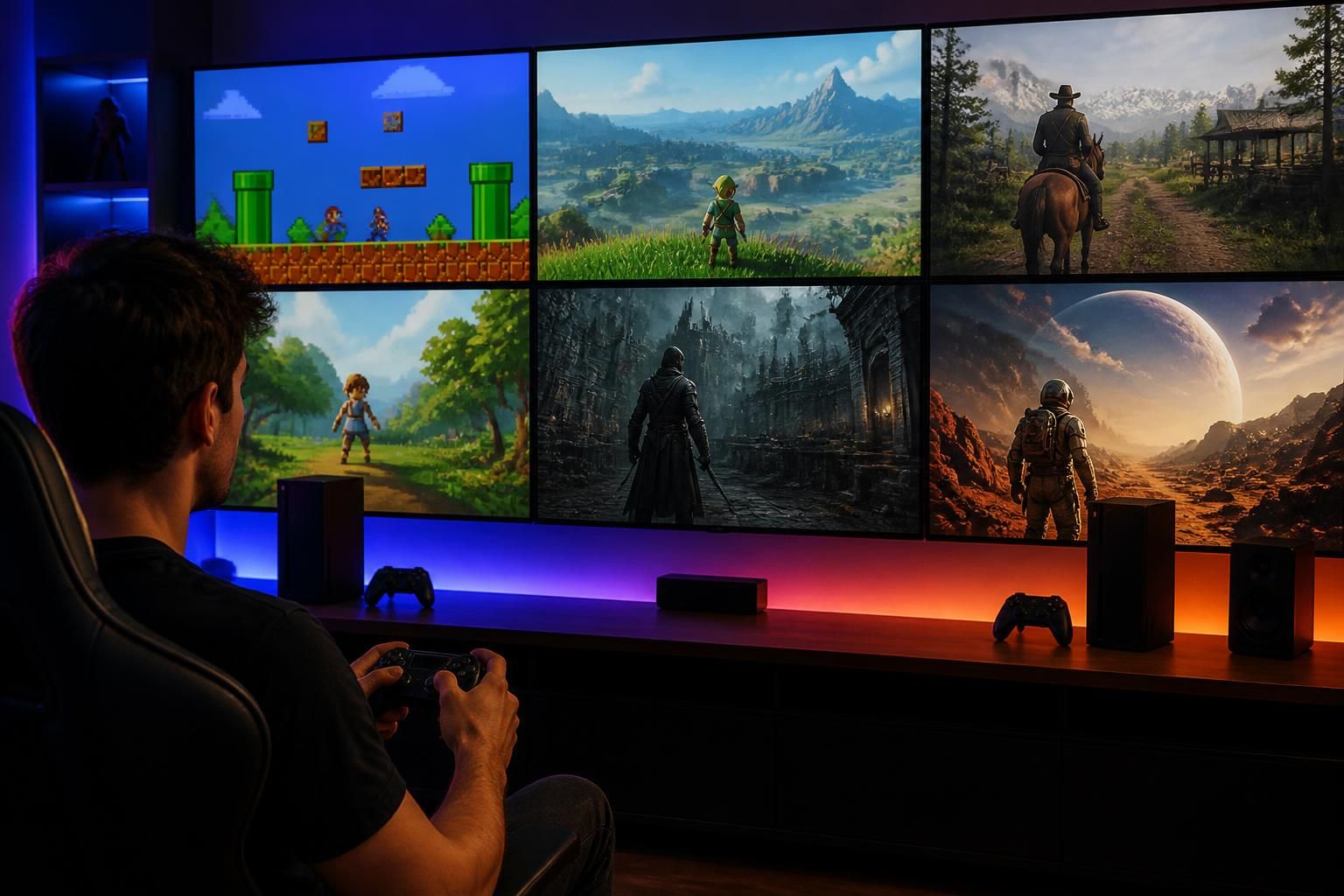
Game art and visual styles have undergone a remarkable transformation since the inception of video games, evolving alongside advances in technology and shifts in player expectations. From the pixelated graphics of early arcade games to the hyper-realistic visuals of contemporary blockbusters, the evolution of game art reflects not only artistic vision but also a response to cultural trends and technological limitations. This article delves into the various phases of game art and visual styles, examining how they have developed and the impact they have had on the gaming experience.
The Early Days: Pixel Art and 8-Bit Graphics
The origins of game art can be traced back to the late 1970s and early 1980s, when the limitations of hardware dictated a simple aesthetic. Early video games utilized pixel art, a style characterized by the use of small, square-shaped pixels to create images. Iconic titles like “Pac-Man” and “Space Invaders” relied heavily on this visual style, which was both functional and a product of its time. The 8-bit graphics offered a straightforward, recognizable form that became synonymous with the era.
Despite their simplicity, these early graphics were often rich in character. Developers creatively employed color palettes and minimalistic designs to convey emotions and narratives, with recognizable figures emerging amidst the graphical constraints. This resourcefulness laid the groundwork for future art styles in gaming, demonstrating that limitations can foster creativity and innovation.
The Rise of 16-Bit and Beyond: A New Era of Detail
The transition to 16-bit graphics in the late 1980s marked a significant leap in game art and visual styles. With increased processing power, developers could now produce more detailed sprites and backgrounds. Games like “Sonic the Hedgehog” and “Street Fighter II” showcased smooth animations and vibrant color schemes, allowing for more complex character designs and immersive worlds.
Simultaneously, this era saw the emergence of iconic art movements within gaming, such as the hand-drawn aesthetics of games like “Castle Crashers.” The ability to create more intricate designs brought forth a wave of creativity, pushing boundaries and enabling developers to tell deeper stories through their visual choices. As a result, character and world design became pivotal in attracting players and enhancing overall engagement.
The Shift to 3D: Exploring New Dimensions
The advent of 3D graphics in the mid-1990s transformed game art and visual styles once more. Games like “Doom” and “Final Fantasy VII” pioneered the use of 3D rendering, offering players a new dimension of immersion. This shift not only changed the way environments and characters were depicted but also introduced concepts such as camera angles and perspective into gameplay.
This period also saw the diversification of styles, as some developers opted for a more realistic approach while others embraced a stylized aesthetic. Titles like “The Legend of Zelda: Ocarina of Time” provided lush, expansive worlds that invited exploration, while “Jet Set Radio” introduced a vibrant, graffiti-inspired visual style. The flexibility of 3D art allowed for a wide range of expressions, catering to various tastes and preferences among players.
Modern Game Art: Realism vs. Stylization
In the modern gaming landscape, game art and visual styles continue to evolve, influenced by both technological advancements and artistic experimentation. As consoles and PCs have gained unprecedented power, developers can create hyper-realistic graphics that push the boundaries of what is visually possible. Titles such as “The Last of Us Part II” and “Cyberpunk 2077” exemplify this trend, featuring lifelike characters and meticulously crafted environments.
However, not all contemporary games adhere to this realistic aesthetic. Many developers have leaned into stylization as a means of artistic expression. Games like “Cuphead” and “Hades” have embraced unique visual styles that distinguish them from their more realistic counterparts. This dichotomy reflects the industry’s acknowledgment that game art can serve both as a medium for realism and an outlet for creative expression. The diversity of styles enhances player choice, allowing individuals to seek experiences that resonate with their preferences.
Future Trends in Game Art and Visual Styles
As technology continues to advance, the future of game art and visual styles is poised for new innovations. The rise of virtual reality (VR) and augmented reality (AR) is already beginning to influence artistic directions, pushing developers to create immersive worlds that players can physically inhabit. Additionally, advances in artificial intelligence (AI) could potentially lead to adaptive art styles that change based on player interactions, further personalizing the gaming experience.
Moreover, the growing trend of indie game development emphasizes unique artistic visions over mainstream realism. Titles like “Celeste” and “Hollow Knight” showcase how limited budgets can lead to inventive art styles that do not compromise on quality. This movement encourages diversity in design and storytelling, ensuring that game art continues to evolve in unexpected and exciting ways.
Conclusion: The Impact of Game Art on the Gaming Experience
Game art and visual styles are more than just aesthetics; they are integral components of the gaming experience that shape how players interact with and perceive games. From the pixelated beginnings of the medium to the stunning realism of today, the evolution of game art reflects broader technological advancements and cultural shifts. As the industry progresses, the interplay between realism and stylization will likely continue to inspire innovation, ensuring that game art remains a dynamic aspect of gaming culture for years to come. The future looks bright for game art, as developers find new ways to engage audiences through compelling visuals that elevate the narrative and emotional depth of games. For more insights into the creative side of gaming, check out resources like สล็อตเว็บตรง.